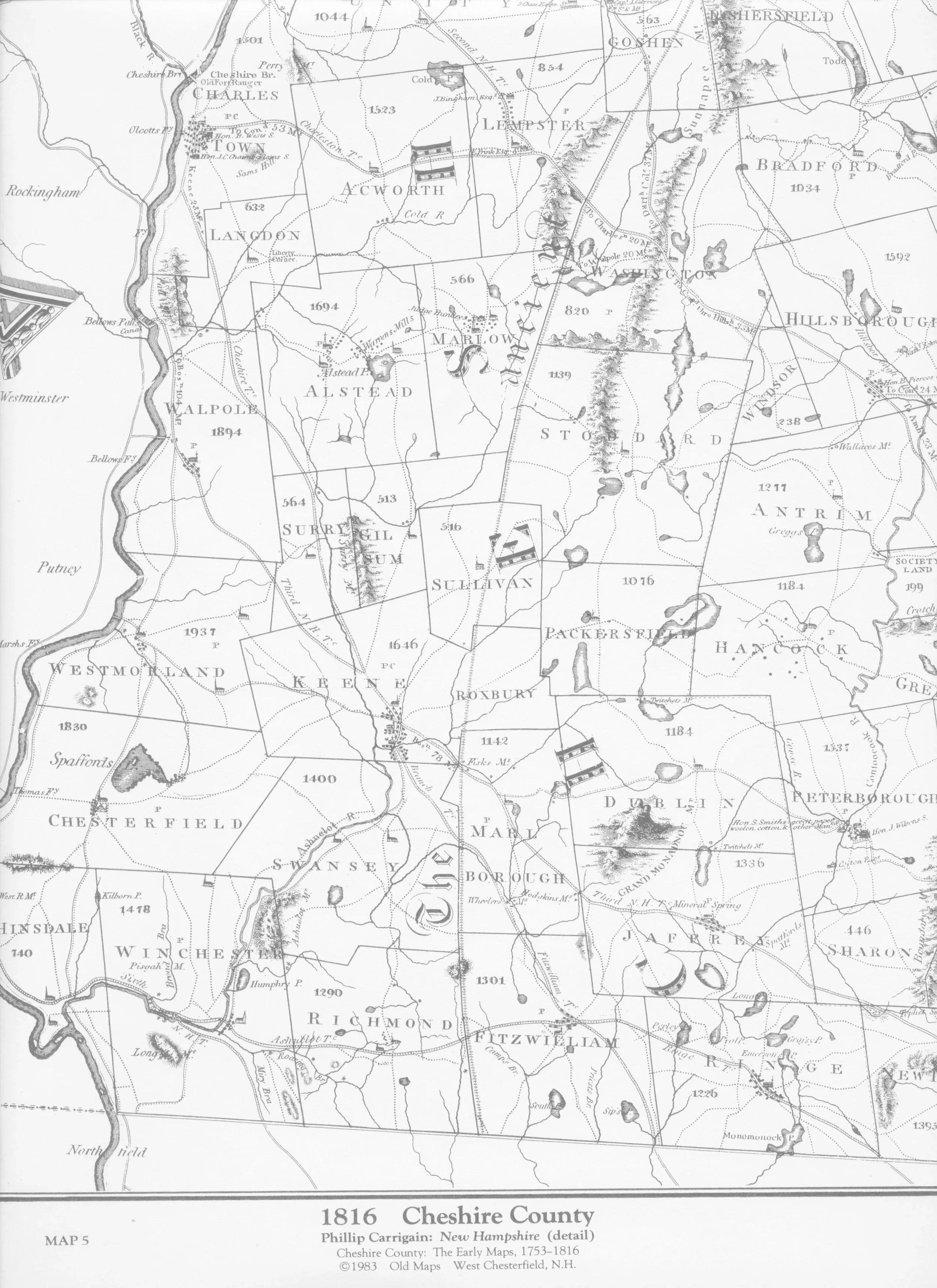
The Richmond Historical Society is a nonprofit 501c3 organization. We are grateful to the members of our community who support our work restoring our town’s historic sites.
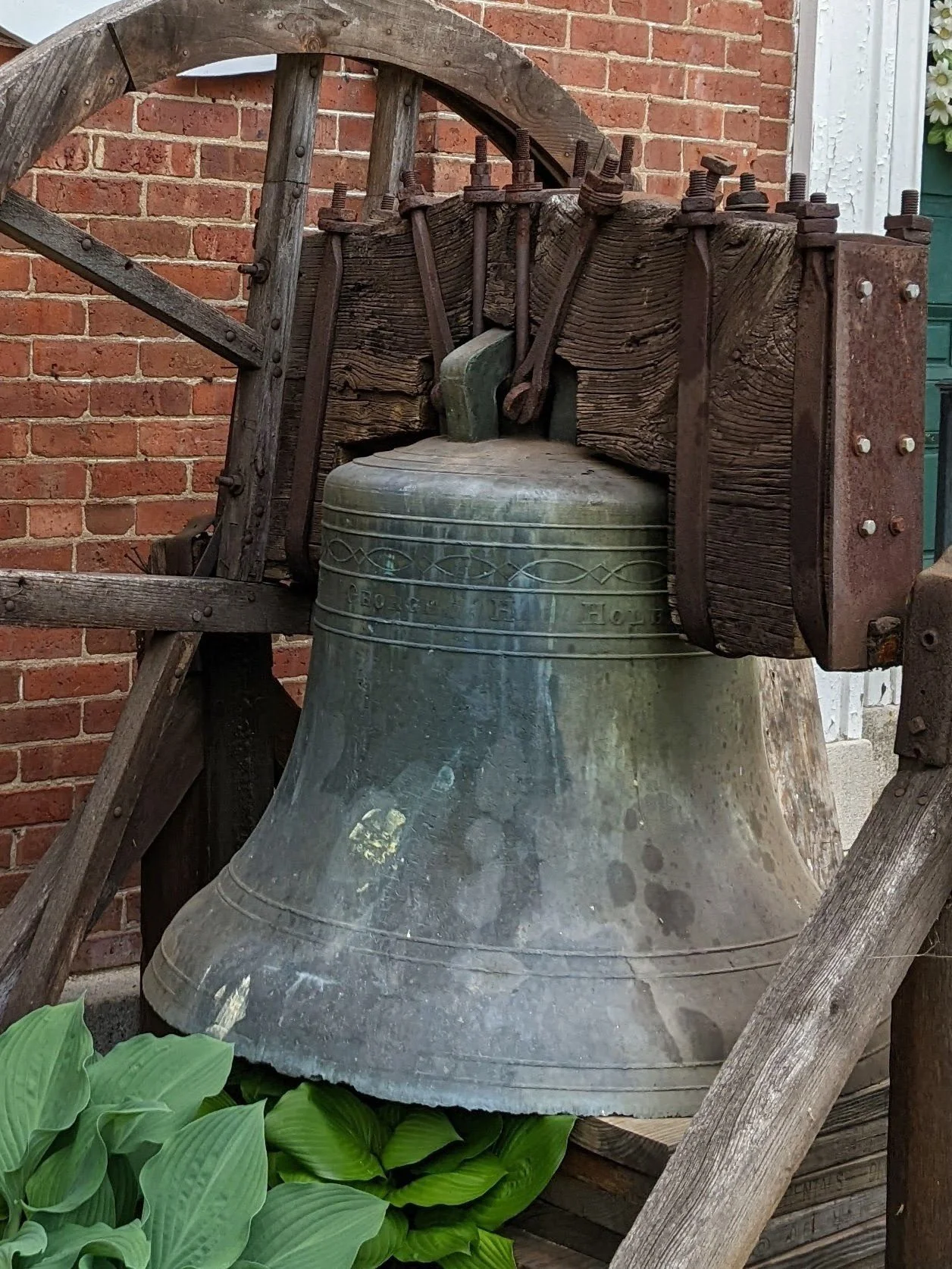
THE OLD BRICK CHURCH BELL PROJECT- Located at 11 Fitzwilliam Road, the Old Brick Church is listed on the National Register of Historic Places. Its’ bell, weighing approximately 900 pounds, was cast in 1840 by the Holbrook Bell Foundry of East Medway, MA. The bell remained in service at the church until 2025, when significant rot was discovered in the belfry and its supporting structure. Because the deterioration posed a safety hazard, the belfry had to be removed and the bell currently lays on the ground in front of the church. Because the church roof can no longer safely support the weight of the bell and belfry, the Richmond Historical Society is exploring ways to preserve the bell. The Society proposes to design and construct a freestanding belfry on a concrete foundation near the church's front entrance. Modeled after the original structure, the new belfry will protect the bell while providing visitors with a visual reminder of the church's architectural and historical significance. In addition, the Richmond Historical Society plans to install interpretive signage that tells the story of the bell, the Holbrook foundry, and the connection to the history of the Old Brick Church and the Richmond community. Donations of any size are greatly appreciated.
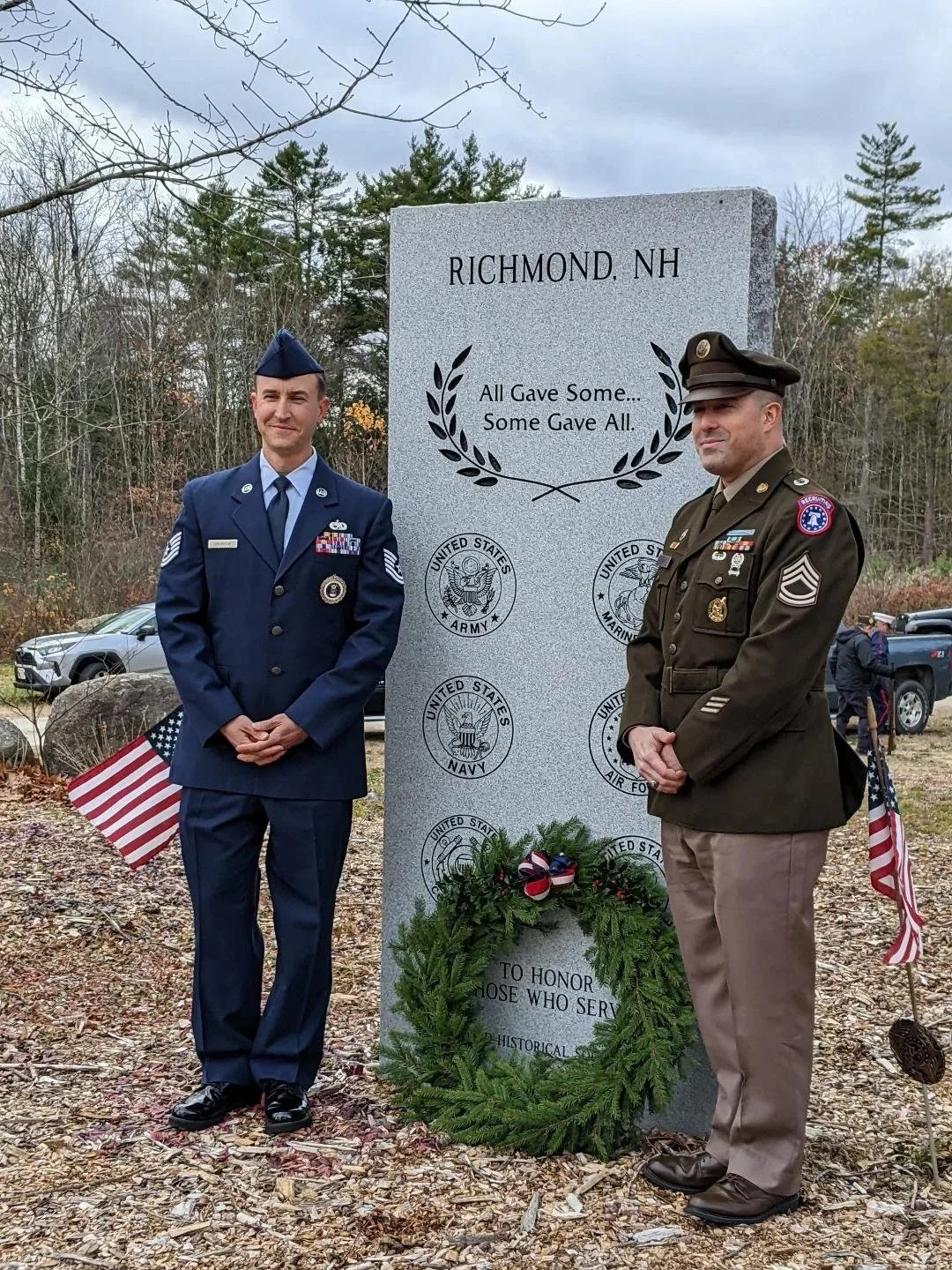
MEMORIAL PARK located next to Veterans Hall. Granite markers honor Richmond veterans who served their country during the Revolutionary War and the Civil War. In 2025, the Historical Society installed an additional monument to honor Richmond veterans from all branches of the military.

TELEPHONE BUILDING located on Rte 32 next to Veterans Hall. Restored in 2016, the Richmond automatic telephone exchange building was originally constructed in 1938 as one of the first such buildings in N.H.

TOWN POND This 40' x 40' stone structure, constructed in 1802 and reclaimed in 2023, was used to corral stray livestock until 1886.
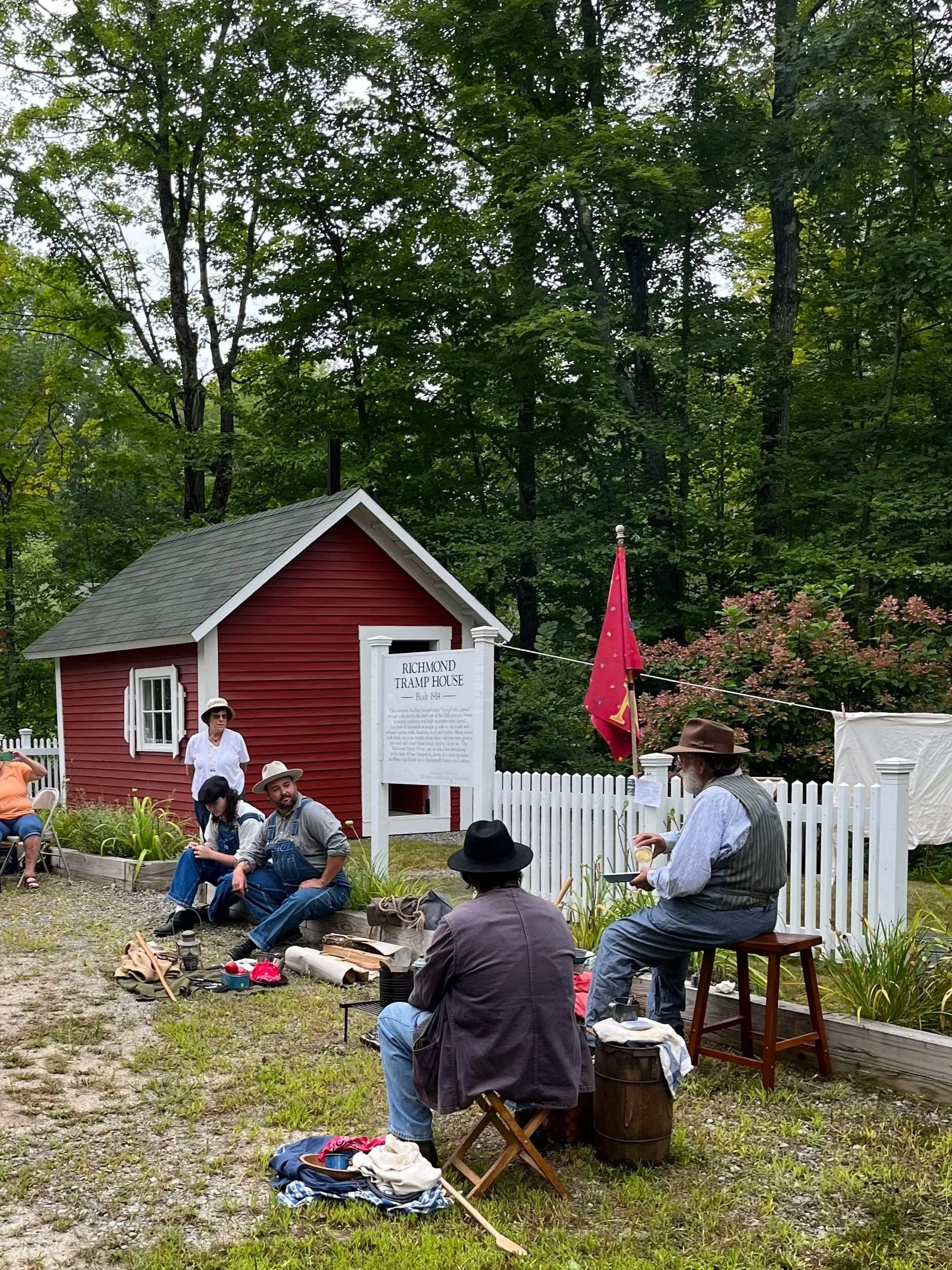
TRAMP HOUSE located near the Richmond Firehouse. One of the few remaining such structures in N.H., this building was originally constructed in 1914 and restored in 2015. It served as a one-night refuge for passing vagrants.
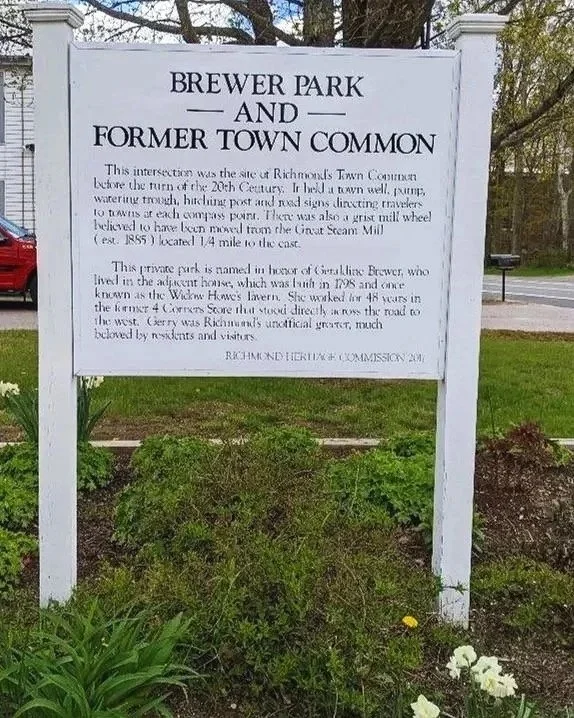
BREWER PARK located at the intersection of Rte 32 & Rte 119 by the Heritage Commission. Sign reads: "This intersection was the site of Richmond’s Town Common before the turn of the 20th Century. It held a town well, pump, watering trough, hitching post and road signs directing travelers to towns at each compass point. There was also a grist mill wheel believed to have been moved from the Great Steam Mill (est. 1885) located 1/4 mile to the east. This private park is named in honor of Geraldine Brewer, who lived in the adjacent house, which was built in 1798 and once known as the Widow Howe's Tavern. She worked for 48 years in the former Four Corner's Store that stood directly across the road to the west. Gerry was Richmond’s unofficial greeter, much beloved by residents and visitors."
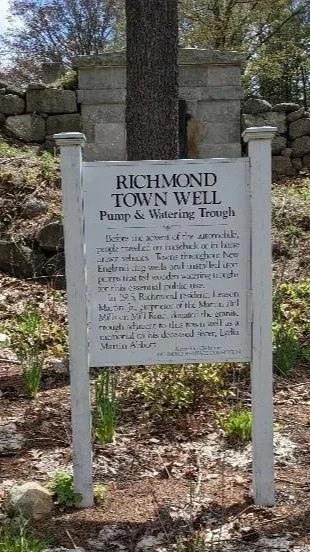
TOWN WELL, PUMP & WATERING TROUGH Site of the Richmond Town Well, a place where animals and people could gather for refreshment. In 1953, Richmond resident Emerson H. Pearson, a carpenter, built and installed the pump and watering troughs. Later, the well was restored by local volunteers.