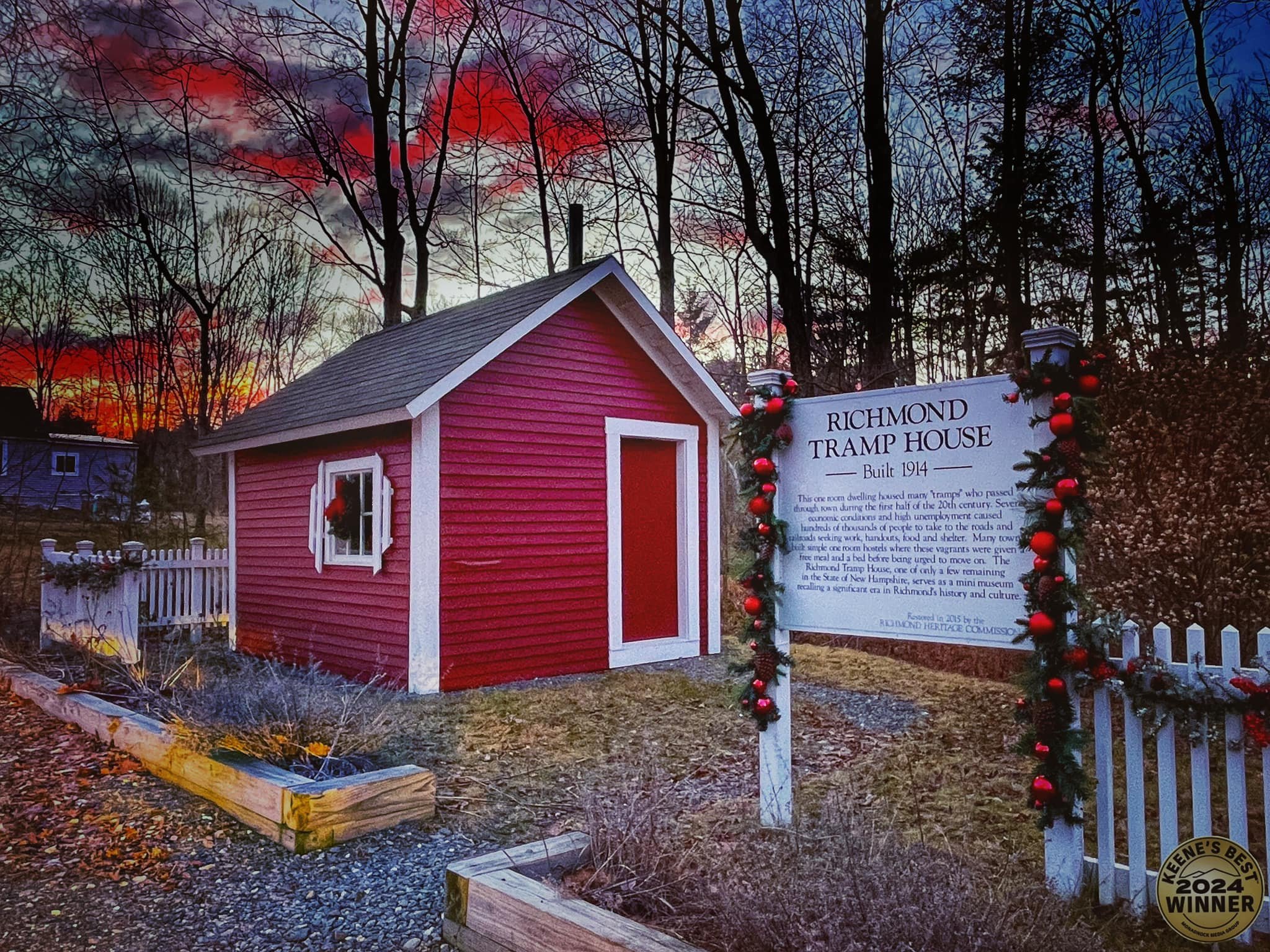
TRAMP HOUSE located on Winchester Rd, across from the Richmond Public Library. This one room dwelling housed many “tramps” who passed through town during the first half of the 20th century. Severe economic conditions and high unemployment caused hundreds of thousands of people to take to the roads and railroads seeking work, handouts, food and shelter. Many towns built simple one room hostels where these vagrants were given a free meal and a bed before being urged to move on. The Richmond Tramp House, one of only a few remaining in the State of New Hampshire, serves as a mini museum recalling a significant era in Richmond's history and culture. Photo courtesy of Darlene Frances.
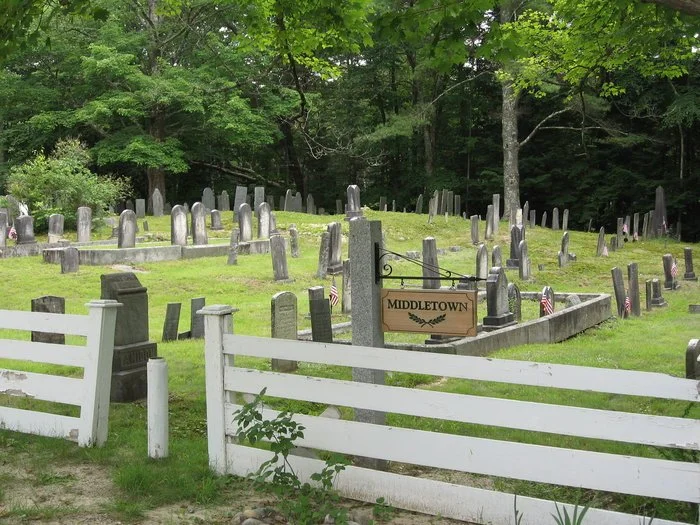
MIDDLETOWN CEMETERY located on Old Homestead Hwy (Rte 32N) next to the Richmond Town Hall. It is one of the town’s oldest burial grounds, dating to the late 1700s or early 1800s. It began as a small, local cemetery serving families in the Middletown district and gradually became a central community burial site. Over time, it has held generations of early Richmond families and likely includes graves of veterans from early American wars. Today, it is town-owned and maintained, still in use but with limited space.
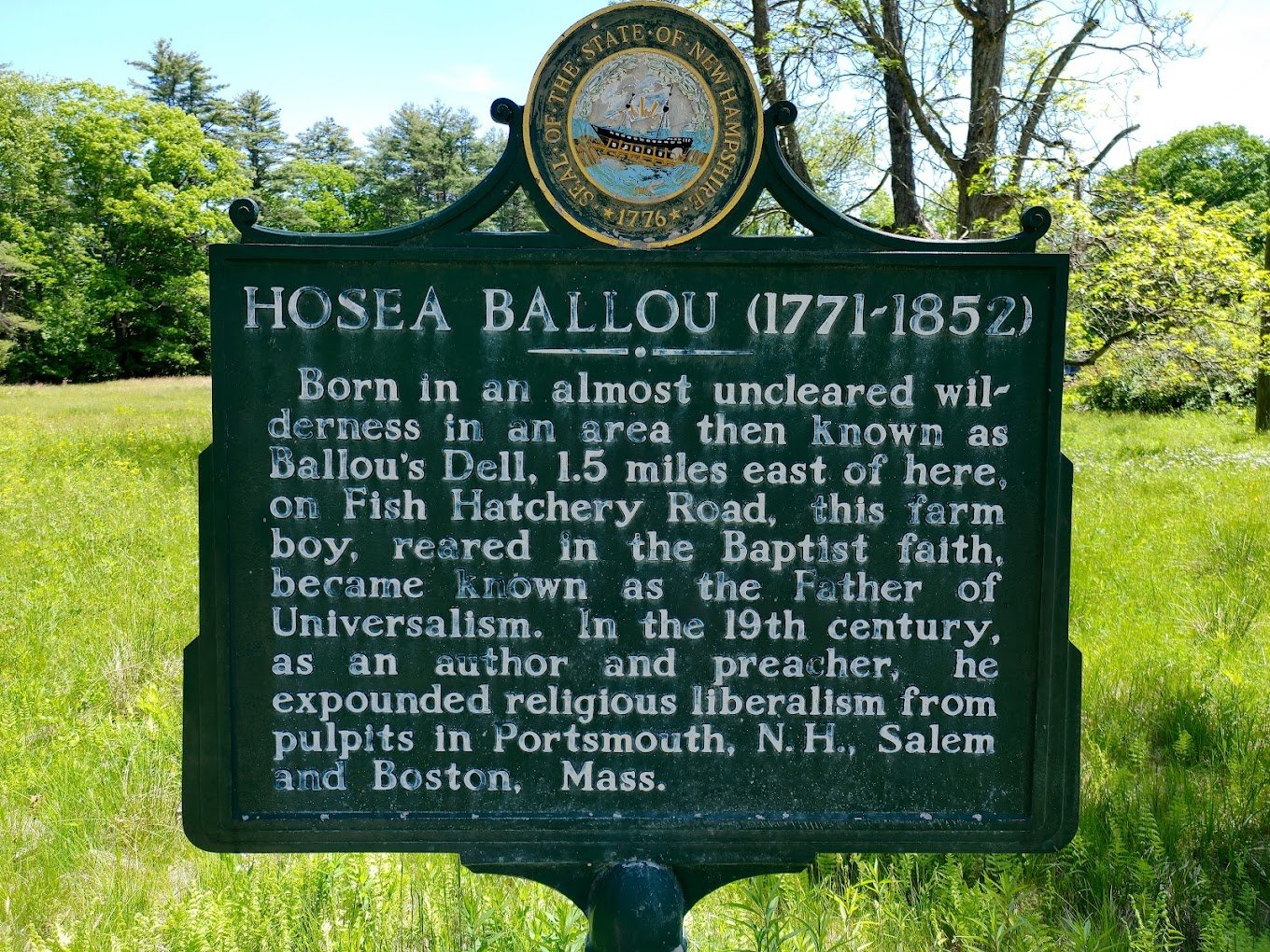
HOSEA BALLOU (1771–1852) marker located on Old Homestead Hwy near Mill Rd. "Born in an almost uncleared wilderness in an area then known as Ballou’s Dell, 1.5 miles east of here, on Fish Hatchery Road, this farm boy, reared in the Baptist faith, became known as the Father of Universalism. In the 19th century, as an author and preacher, he expounded religious liberalism from pulpits in Portsmouth, N.H., Salem and Boston, Mass."
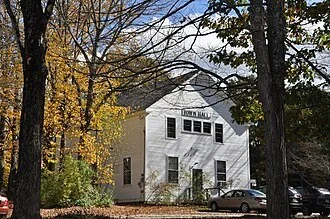
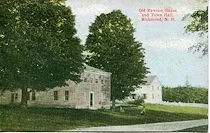
RICHMOND TOWN HALL located at 105 Homestead Hwy. The building was constructed in 1780 to house Richmond's First Baptist Church, established in 1768, was one of the first Baptist congregations in the New Hampshire. The church became notable in the early history of Christian universalism, because Hosea Ballou, son of its first settled minister, became one of the leading proponents of that doctrine. The congregation merged with another in 1830, ending its association with the building. The pews and pulpit were removed in 1884, at which time the rear gallery space was adapted to house town offices, and a stage was added to the auditorium in place of the pulpit.
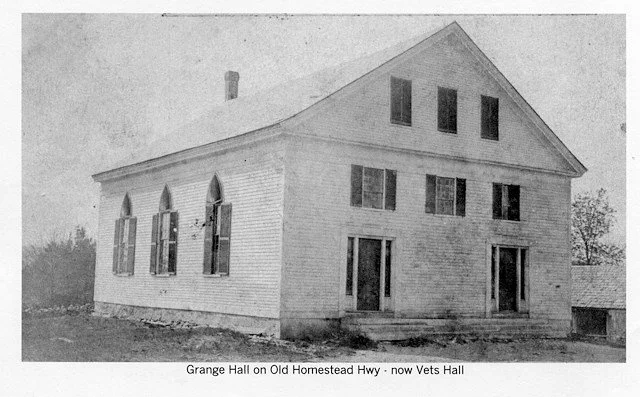
No. 147 Grange Hall, Veterans Memorial Hall, located at 150 Old Homestead Hwy. Built in 1837, the building has double doors on the front, arch shaped windows on the sides and shutters on the windows. The carriage shed pictured to the right of the building was later taken down.
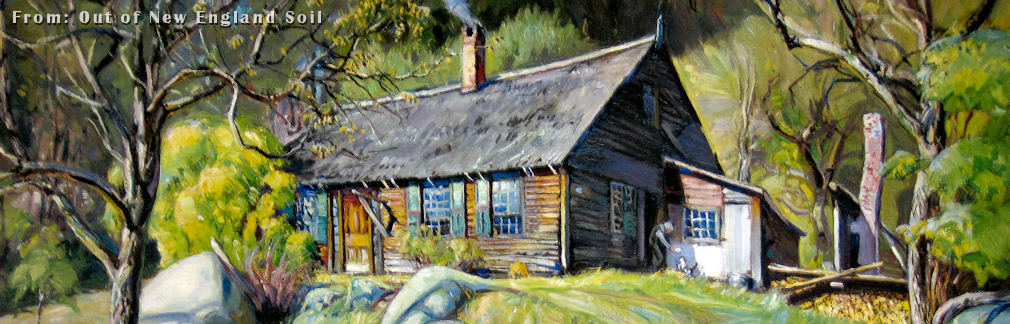
"Mr. Franklin's House" painting by Robert Strong Woodward. Click on the picture to visit the RSW website.